
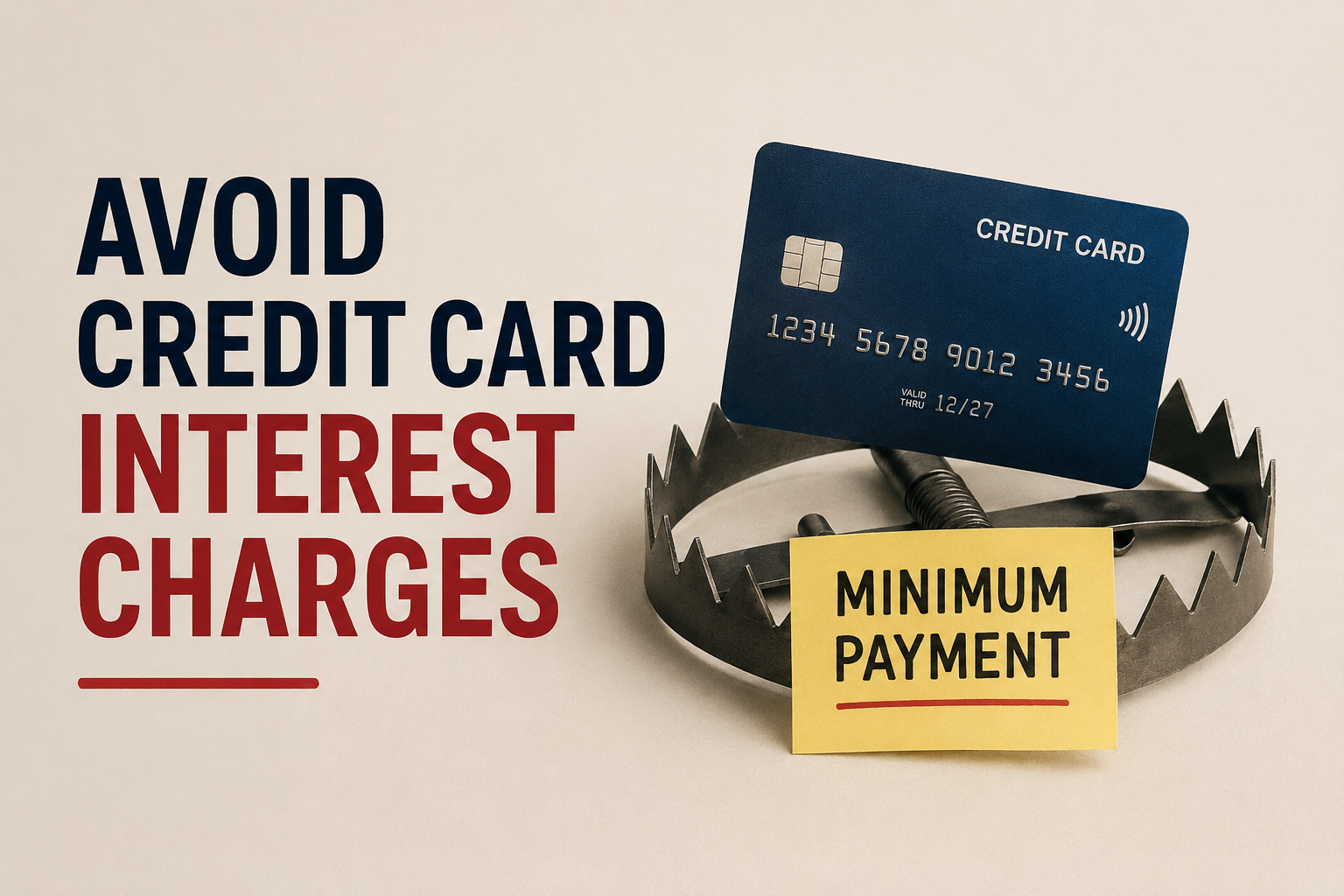
The only reliable way to avoid credit card interest in India is boring: pay the full bill (Total Amount Due) before the due date. Everything else — paying the minimum due, carrying a balance, or swiping more while old debt sits — is how a ₹40,000 purchase turns into years of 40%-plus annual interest.
Banks must now warn you on the bill itself. In March 2024, the Reserve Bank of India told issuers to spell out that paying only the minimum can stretch repayment for months or years with heavy interest.
This guide is the how-to version: grace period, billing cycle, what “minimum due” really does, and seven moves to stay out of the trap. For HDFC/SBI worked examples from MITC PDFs, see our companion minimum due trap explainer.
Cards in this comparison (3)



How to avoid interest — the short answer
| Goal | What to do |
|---|---|
| Zero interest on purchases | Pay 100% of Total Amount Due by the due date every cycle |
| Already carrying a balance | Stop new spends on that card; pay more than minimum; target the highest rate card first |
| Cash crunch this month | Pay as much above minimum as possible; ask the bank about EMI conversion (read the rate in writing) |
Catch: rewards and cashback do not offset revolving interest for most people. A ₹500 cashback month can disappear behind ₹2,000+ interest if you revolve.
Grace period and billing cycle (when interest actually starts)
Indian cards usually give an interest-free window on purchases if you cleared last month’s bill in full. The RBI credit card FAQs explain that if you do not pay the total amount due by the due date, you can lose that free period — and interest may apply on outstanding amounts (wording varies by bank booklet).
Billing cycle basics:
- Statement date — the bank adds up spends for that period.
- Due date — last day to pay without being marked late (usually 18–21 days after the statement, but check your SMS).
- Total Amount Due (TAD) — what you must pay to avoid interest on the billed purchases (plus any prior revolving balance rules in your MITC).
- Minimum Amount Due (MAD) — the smallest payment to avoid a late fee; it does not mean “no interest.”
Mistake to avoid: assuming interest starts only on the due date. Once you revolve, many banks charge from transaction dates on the unpaid chunk — your MITC PDF is the source.
The minimum payment trap — why “MAD” is not a strategy
The yellow “minimum payment” line on your app is relief for one month, not a repayment plan. RBI’s 2024 circular requires banks to warn that only paying the minimum can mean very long payoff times.
How minimum due is calculated (varies by bank):
Illustrative trap (not your exact bill):
Suppose ₹50,000 is outstanding and the bank charges about 3.5% per month (~42% a year) on the revolving portion. Minimum due might be ~₹2,500. A large share of that ₹2,500 can be interest and GST, leaving only a small slice to reduce the ₹50,000 principal. Next month, interest is charged on a balance that barely moved.
SBI’s booklet includes a story where ₹10,000 at minimum-only payments can take on the order of ~52 months to clear — see the companion article for the citation.
Seven ways to avoid or escape interest charges
1. Autopay the full TAD — set full statement auto-debit from your salary account, not “minimum.”
2. Treat MAD as emergency-only — use it only to avoid a late mark in a genuine crunch, then catch up next month.
3. Freeze the card while revolving — no new Swiggy runs on a card that already carries unpaid balance.
4. Pay highest-APR card first — if you hold multiple cards, HDFC MITC and SBI MITC show different rate bands (premium vs mass). Attack the expensive balance.
5. Convert to EMI with eyes open — bank EMI rates are often lower than revolving but are not free; compare total outflow vs paying down in 1–2 months.
6. Never take a cash advance — ATM cash on a credit card usually starts interest immediately with extra fees.
7. Pick a limit you can clear — a ₹2 lakh limit you cannot repay is a trap, not status. Compare fees and caps on Browse cards before you upgrade.
Use CardCheck’s free Quiz to match a card to spends you can realistically pay in full every month — about one minute.
Starter cards — rewards only help if you pay in full
These popular cashback cards make sense when you clear the bill. If you revolve, the effective cost of rewards turns negative fast:
HDFC Millennia Credit Card
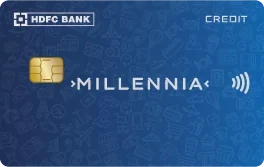
Who it suits: online spends with disciplined full payment. Catch: high revolving rates in HDFC’s common MITC table — rewards do not cancel interest.
Axis ACE Credit Card
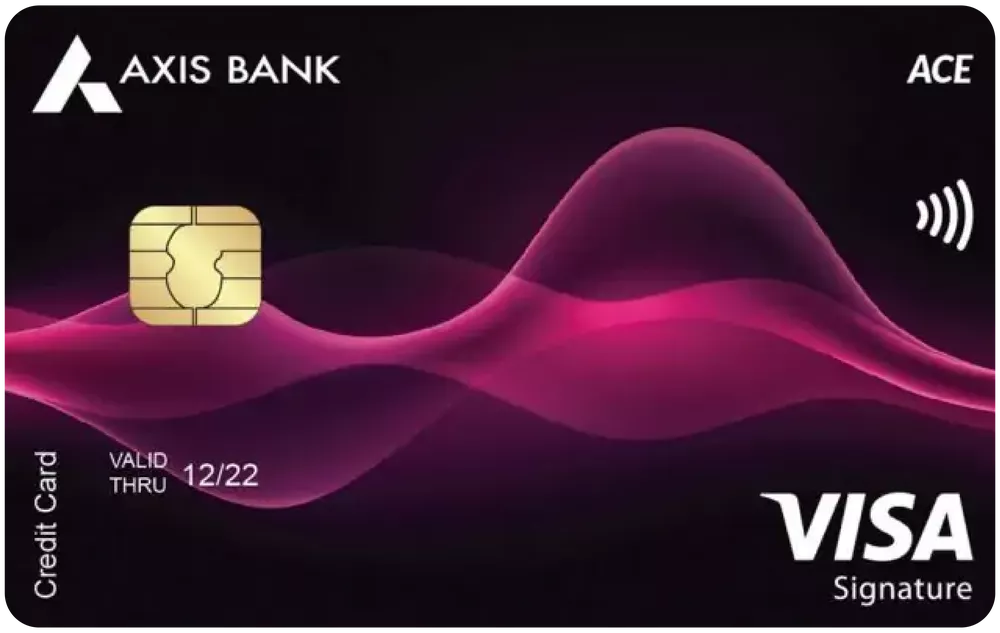
Who it suits: bill-pay and shopping cashback when TAD is zeroed monthly. Catch: same rule — pay in full or the APR dominates.
SBI Cashback Credit Card
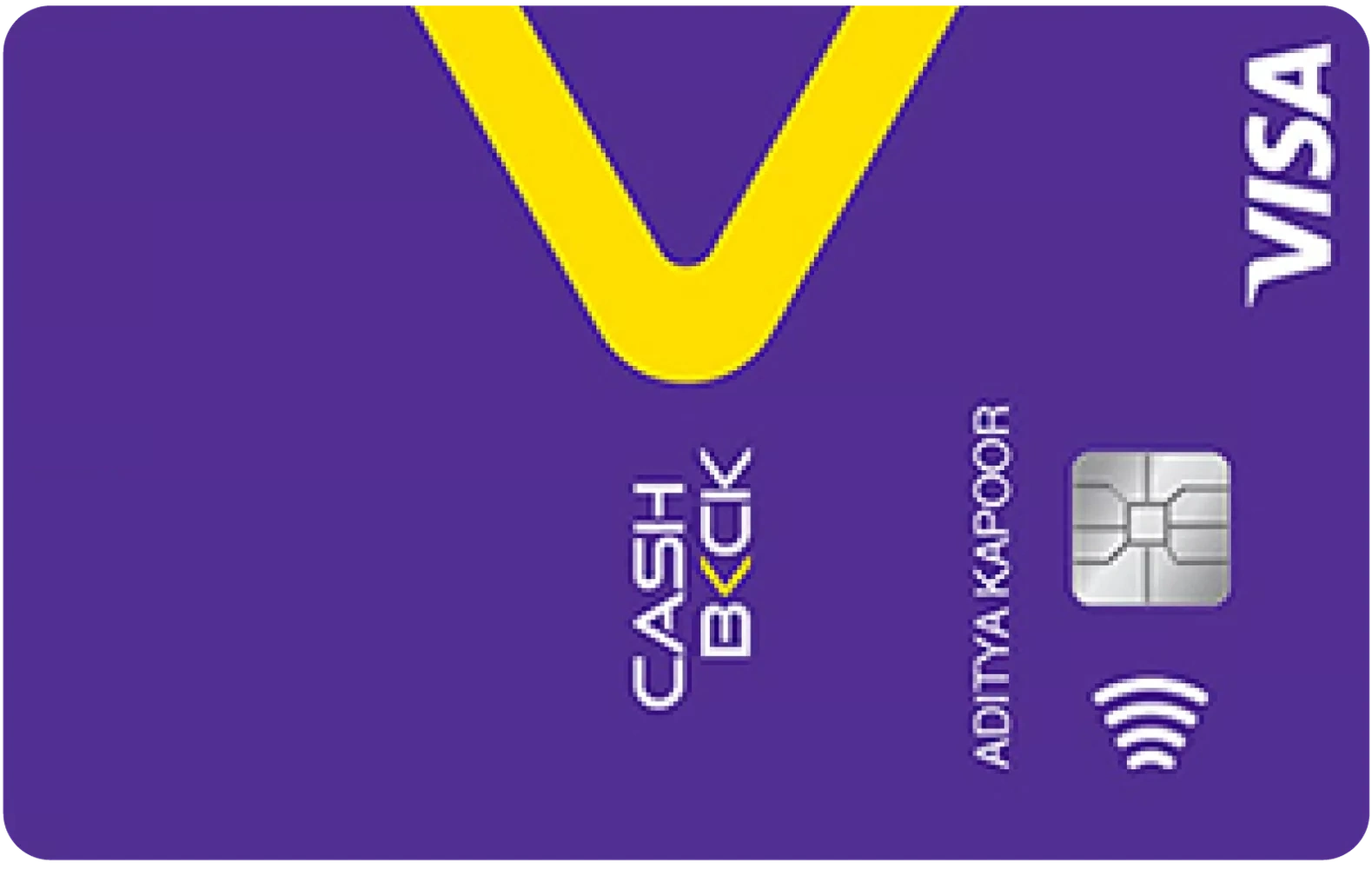
Who it suits: capped online/offline cashback for users who never carry balance. Catch: SBI’s MITC lists up to 3.75% per month finance charges when the full bill is not paid.
What if you are already stuck in minimum-only payments?
Week 1: List each card’s TAD, MAD, due date, and MITC interest rate.
Week 2: Move daily spends to debit / UPI until one card’s balance drops meaningfully.
Week 3: Call the bank’s customer care (record the reference number) and ask about hardship / restructuring / EMI — only accept after reading the total interest in the offer SMS or email.
Week 4: File a complaint on the bank portal if charges look wrong; RBI’s Integrated Ombudsman route exists if the bank does not resolve it — details on rbi.org.in.
Deep dive on regulator wording and PDF numbers: Credit card minimum due trap — why paying only minimum is dangerous.
Sources
- RBI — March 2024 credit card circular — minimum-payment warning on bills; interest on outstanding balances.
- RBI — Credit card FAQs — loss of interest-free credit when TAD is unpaid.
- HDFC Bank — Credit card MITC PDF — MAD formula; monthly rate table.
- SBI Card — MITC PDF (English) — MAD recipe; finance charge cap; long payoff illustration.
Please note
General education only — not tax or debt counselling. Rates and formulas change; your live statement and issuer MITC override any article. Snapshot 2026-05-19.
FAQ
- Can I avoid interest by paying minimum due on time?
No for the unpaid balance. Minimum due avoids late payment status in most cases, but interest still applies on what you leave outstanding — and you may lose the grace period on new spends per RBI FAQs.
- What is the difference between total due and minimum due?
Total Amount Due — pay this to clear the billed cycle without revolving interest (subject to MITC). Minimum Amount Due — smallest payment to stay “current”; most expensive way to use a card long term.
- How many days interest-free do Indian cards give?
Often ~20–50 days from purchase to due date if you paid the previous bill in full. The exact window depends on when you swiped in the billing cycle and your bank’s rules.
- Is EMI better than paying minimum due?
Usually yes if the EMI rate is clearly below your revolving APR and you stop adding new balance. Still read processing fee + GST and total tenure cost.
- Do cashback cards charge less interest?
No. The same finance charge table in the MITC applies. Cashback only wins when you pay in full.
- Where are the HDFC ₹628 and SBI 52-month examples?
In our minimum due trap article — copied from the banks’ own PDF examples, not invented here.
Cards in this comparison (3)

Vineet Verma
Lead AnalystLead Financial Researcher & Credit Card Analyst at CardCheck
Vineet specializes in Indian retail banking terms, reward point economics, and MITC verification. Every insight is audited against official bank filings.