
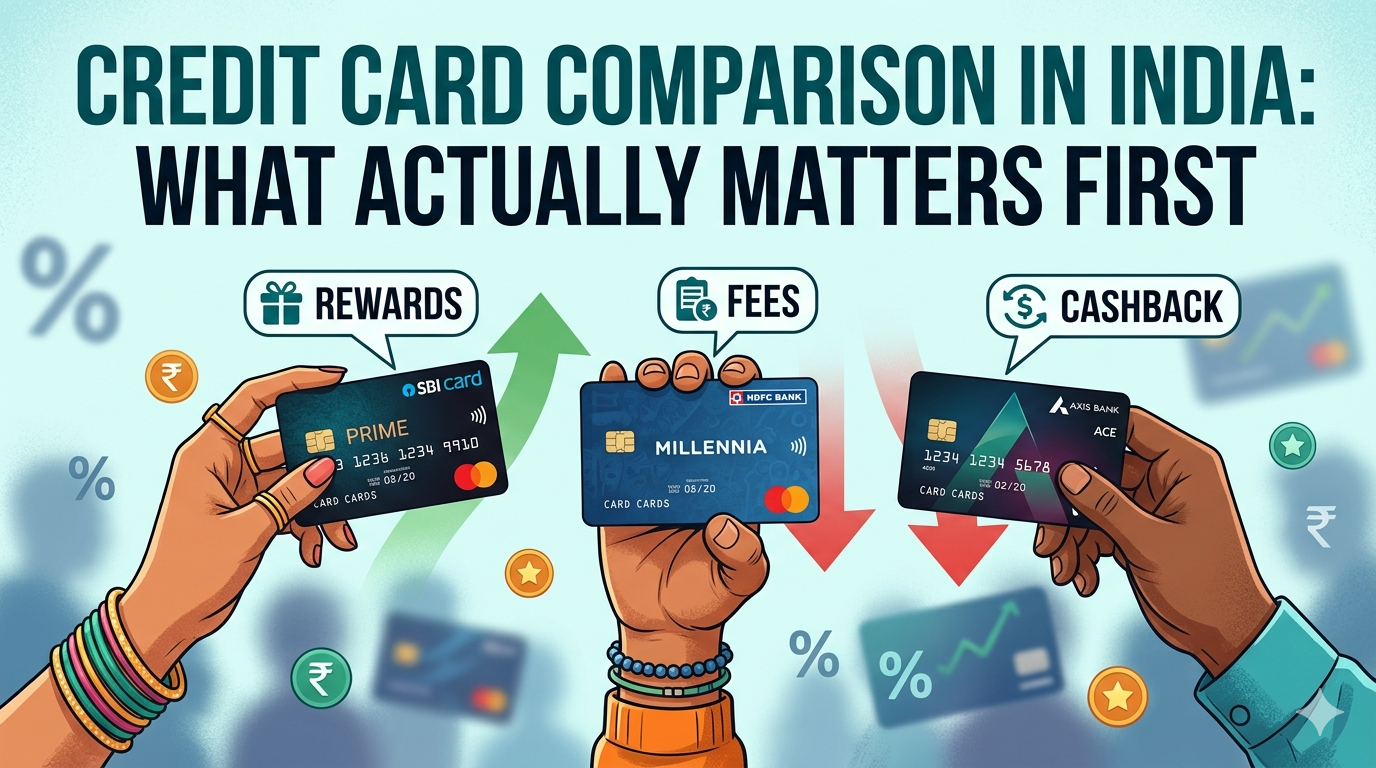
You open three credit card pages. All three say they are the best. Your brain says "nice." Your wallet says "please verify the fine print."
This guide keeps it simple: compare cards by your real spends, annual-fee break-even, reward caps, and exclusions. Not by ad headlines. Not by airport selfies.
If you want a quick shortlist in under a minute, start with the Card Match Quiz. If you want exact numbers, run your spends in the Rewards Calculator.
Cards in this comparison (4)
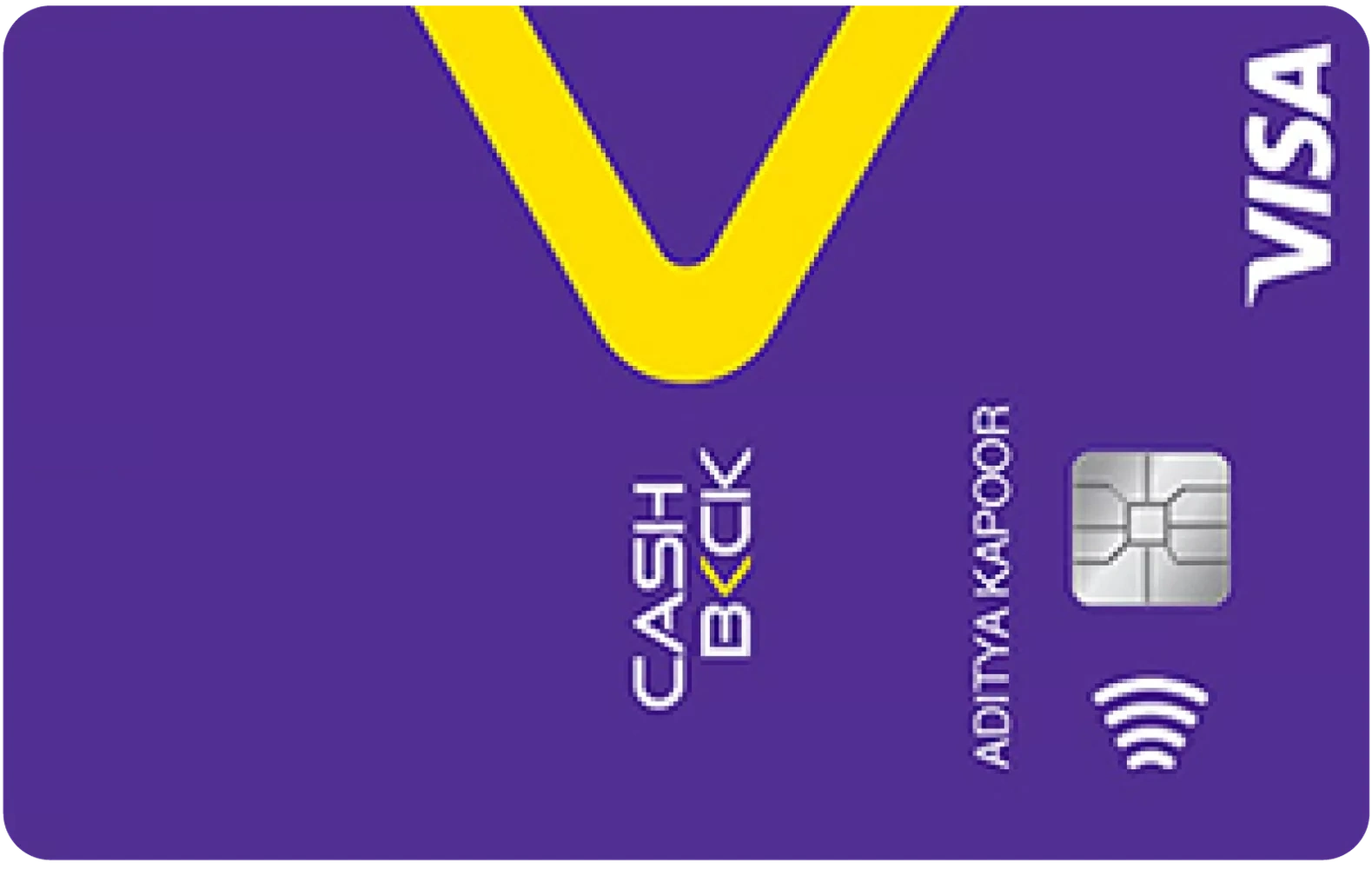

CASHBACK SBI Card
Online cashback
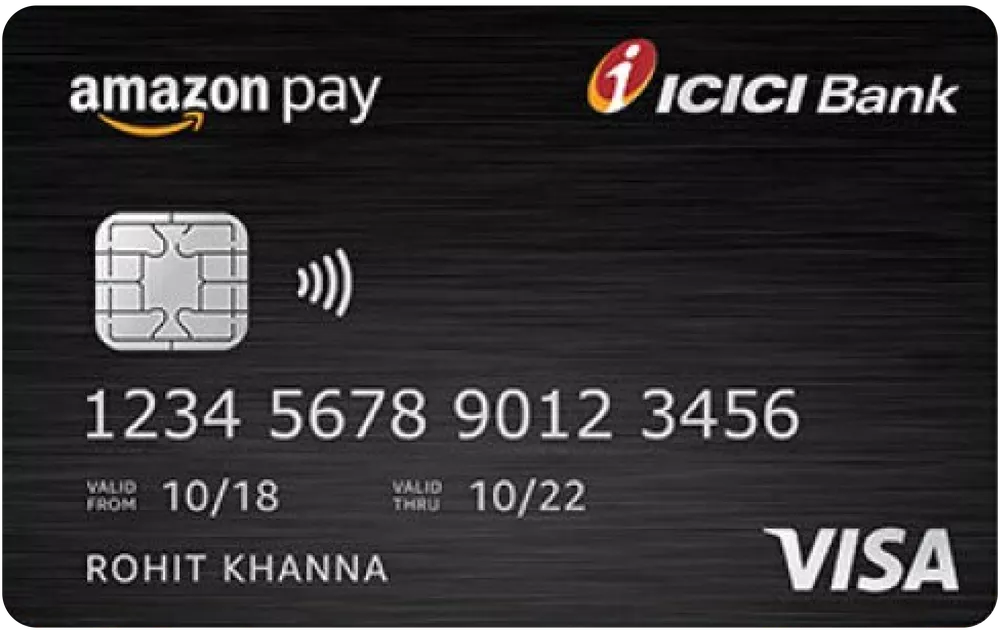

Amazon Pay ICICI Bank Credit Card
Rewards on Amazon Purchases

HDFC Millennia Credit Card
online shoppers
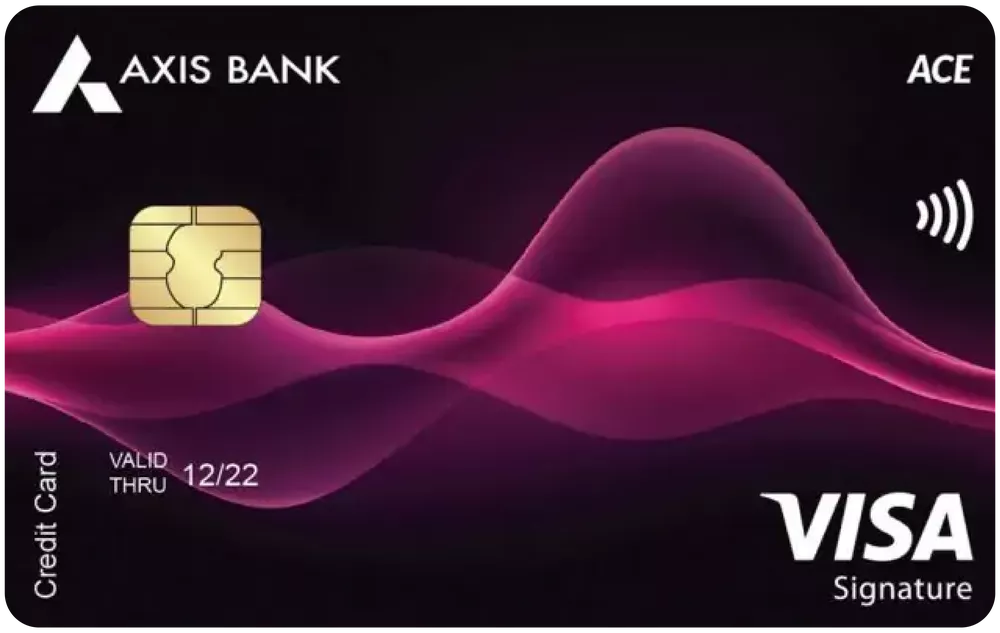

ACE Credit Card
Cashback on utility bills via Google Pay and daily spending
What to compare first (before you get impressed by 10X rewards banners)
Most bad card decisions happen because people compare headline rewards first.
Use this order instead:
- Spend fit: Where 50%+ of your monthly spend goes (online shopping, travel, dining, fuel, bills).
- Fee reality: Joining fee, annual fee, and fee-waiver threshold.
- Reward format: Statement cashback, points, miles, or wallet credit.
- Reward cap: Monthly/quarterly limits that reduce your effective return.
- Exclusions: Rent, wallet loads, EMI, fuel, certain government spends.
A card can advertise 5% cashback and still underperform a 3% card for your pattern. Caps and exclusions decide the winner.
The 3-line break-even method for annual fee cards
You only need simple maths:
- Expected annual rewards (cap-adjusted)
- Minus annual fee
- Equals net value
Break-even spend can be estimated as:
Annual fee / reward rate in your primary category
Example: if a card fee is `₹999` and your effective cashback is 5%, you need about `₹19,980` annual eligible spend to recover the fee.
If two cards are close in net value, pick the one with easier redemption and fewer category rules. Complexity is expensive in real life.
Compare popular cards by use case
SBI Cashback Card
Best for: Broad online spenders with no platform loyalty.
Why it works: 5% on eligible online spends is simple and powerful if your spending is distributed across apps and merchants.
Watchouts: Monthly cashback cap and excluded categories still apply.
Amazon Pay ICICI Credit Card
Best for: Amazon-heavy users who want zero annual fee.
Why it works: Strong value for Amazon ecosystem spends with no annual-fee pressure.
Watchouts: Returns outside Amazon ecosystem are usually lower.
HDFC Millennia Credit Card
Best for: Partner-platform online shoppers who can use category bonuses consistently.
Why it works: Good upside on specific partner spends and manageable fee-waiver targets for many users.
Watchouts: Reward format and caps require attention to realize full value.
Axis Bank ACE Credit Card
Best for: Users who want practical cashback in day-to-day categories.
Why it works: Strong utility for specific spend flows and straightforward value in common scenarios.
Watchouts: Check exclusions and latest issuer terms before final call.
Side-by-side comparison table (quick shortlist view)
| Card | Annual fee | Reward style | Usually strongest for | Key catch |
|---|---|---|---|---|
| SBI Cashback | ₹999 (waiver conditions apply) | Cashback | Broad online spends | Monthly cap + exclusions matter |
| Amazon Pay ICICI | Lifetime free | Cashback to Amazon Pay balance | Amazon ecosystem spend | Value is strongest inside ecosystem |
| HDFC Millennia | ₹1,000 (waiver conditions apply) | Cashback/CashPoints style | Partner-brand online spends | Cap + redemption flow can reduce convenience |
| Axis ACE | Fee as per issuer terms | Cashback | Practical everyday categories | Exclusions and category conditions apply |
This table is for quick filtering. For final selection, calculate with your own monthly category split.
The cap and exclusion checklist (the part most listicles skip)
Before applying, check these in card terms:
- Monthly cap: What is the maximum cashback/points per cycle?
- Category cap: Is the headline rate only for one partner category?
- Excluded spends: Rent, wallet loads, EMI conversions, fuel, and selected government transactions are often excluded.
- Reward credit timing: Monthly, statement-cycle, or manual redemption.
If you ignore these, your expected return and actual return will be very different. Usually by the exact amount you were planning to brag about.
How to compare any 2 cards in 2 minutes
- Write your top 3 spend categories from last 2-3 months.
- Apply each card reward rate only to eligible categories.
- Apply monthly/quarterly caps.
- Remove excluded transactions.
- Subtract annual fee (or test waiver likelihood).
- Pick simpler redemption when net values are similar.
Do this once and you will avoid most comparison mistakes.
If you want CardCheck to do the heavy lifting, run Rewards Calculator, then verify approval fit with Eligibility Checker.
FAQ
- What is the best credit card in India for everyone?
There is no single best card for everyone. The right card depends on your spend mix, fee tolerance, and whether you can actually use category rewards and waivers.
- Do credit card applications hurt CIBIL score?
Applications can trigger hard inquiries, which may temporarily affect score. Compare first, then apply selectively instead of applying for many cards together.
- Are lifetime-free cards always better?
Not always. A paid card can outperform lifetime-free if your eligible spend is high enough to recover fees and deliver higher net value.
- Why does my cashback look lower than expected?
Most gaps come from monthly caps, excluded transactions, or lower reward rates outside bonus categories. Always estimate using cap-adjusted returns.
- Should I pick cashback or points cards?
Pick cashback for simplicity. Pick points/miles only if you will redeem consistently and understand conversion values and redemption restrictions.
Cards in this comparison (4)
CASHBACK SBI Card
Online cashback
Amazon Pay ICICI Bank Credit Card
Rewards on Amazon Purchases
HDFC Millennia Credit Card
online shoppers
ACE Credit Card
Cashback on utility bills via Google Pay and daily spending

Vineet Verma
Lead AnalystLead Financial Researcher & Credit Card Analyst at CardCheck
Vineet specializes in Indian retail banking terms, reward point economics, and MITC verification. Every insight is audited against official bank filings.