
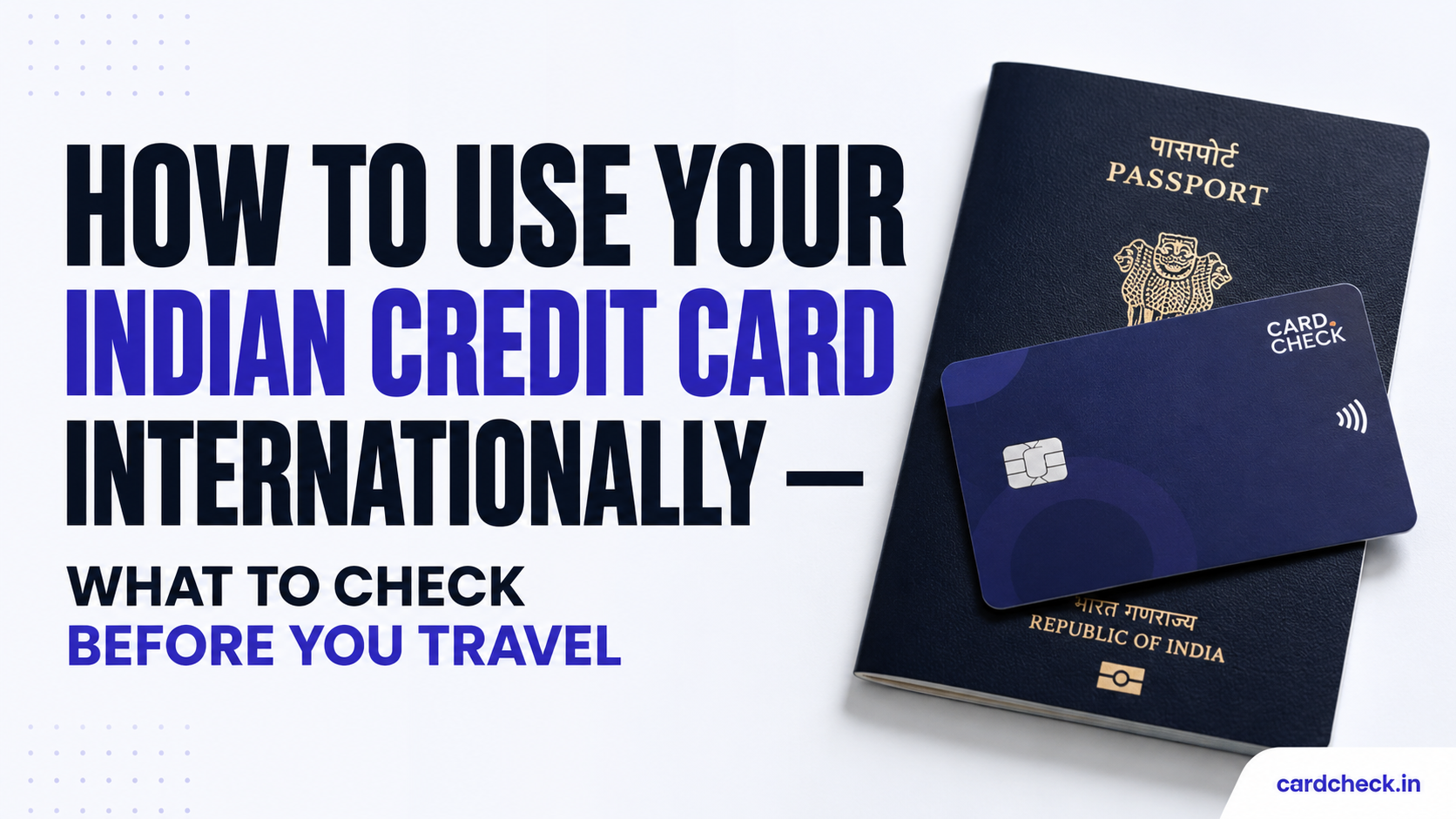
Your Indian credit card works abroad — until it does not: international usage off, fraud block, or a “pay in INR?” prompt that quietly adds cost.
A short pre-travel checklist on the issuer app takes less time than arguing at hotel check-in. Below: what to toggle before you fly, which plastic to carry, how to swipe safely, and where forex markup fits (with links to deeper guides).
Facts trace to issuer MITC / tariff pages and RBI credit card FAQs — not forum myths. Snapshot 2026-05-19.
Cards in this comparison (3)
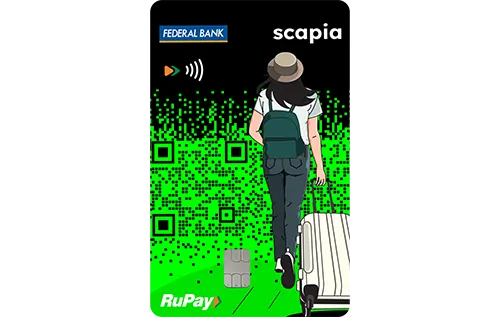

Scapia Federal Bank Credit Card
International travellers — zero forex + travel coins on every spend
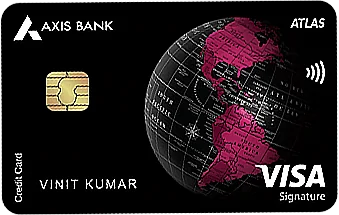

Axis Bank Atlas Credit Card
Travel rewards — EDGE Miles for flights and hotel stays
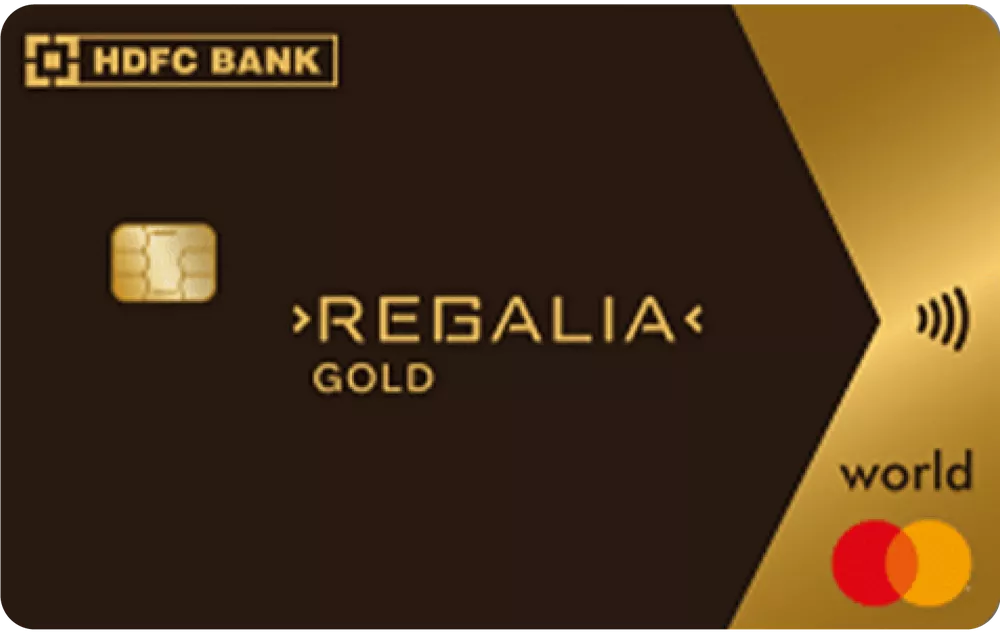

Regalia Gold Credit Card
Travel rewards
Before you travel — 10-point checklist
| # | Task | Why it matters |
|---|---|---|
| 1 | Enable international POS + online in the issuer app | Default-off cards decline foreign merchants |
| 2 | Travel intimation (dates + countries) | Reduces false fraud blocks |
| 3 | Note international spend limit vs trip budget | Caps can be lower than domestic limit |
| 4 | Confirm network (Visa / Mastercard / RuPay) | Acceptance differs by country |
| 5 | Read forex markup % in MITC | Adds 2–3.5%+ on many Indian cards |
| 6 | Set SMS / email / app alerts | Catch fraud and DCC surprises fast |
| 7 | Save 24×7 lost-card / dispute numbers offline | Airport Wi‑Fi is not guaranteed |
| 8 | Autopay full bill for return month | Post-trip interest erases FX savings |
| 9 | Pack second card (different network if possible) | Backup if one issuer blocks |
| 10 | Screenshot MITC FX + ATM sections | Proof if wrong fee posts |
Step 1 — Turn on international usage and inform the bank
Most issuers hide international transactions behind app settings — separate toggles for e-commerce and sometimes ATM.
Travel intimation (dates, destinations) is still worth filing even when the app says “not mandatory.” Fraud systems flag sudden foreign spend; a logged trip reduces declines at dinner.
Check whether your card needs OTP / 3-D Secure for foreign online bookings — keep the registered mobile number active on roaming or via issuer SMS forwarding where supported.
Step 2 — Know your limits and documents
Credit limit is not the same as international transaction limit. In the app, look for:
- Per-transaction cap abroad
- Daily international cap
- Contactless limit overseas
Carry physical card + PIN — many countries still expect chip-and-PIN, not signature-only.
For large tuition, medical, or property payments, ask your bank about wire / LRS routes before stacking card swipes — regulatory and fee rules differ from holiday shopping.
Step 3 — Choose which card goes in the wallet
Match the card to the trip:
| Trip style | What to optimise |
|---|---|
| Short leisure | Low forex markup, reliable Visa/MC acceptance |
| Frequent flyer | Lounge + insurance + miles if FX volume justifies annual fee |
| Mixed domestic return | Do not assume one card is best for both — split wallets |
RuPay works in more countries than before but Visa/Mastercard remain safer for global backup. If your primary travel card is RuPay-only, add a second network.
Forex savings detail: How to save money on international transactions. Full zero-markup list: Forex markup explained.
Three cards travellers compare (snapshot 2026-05-19)
Scapia Federal Bank Credit Card
Check before travel: 0% forex markup in CardCheck data — strong for low-FX holiday spend. Confirm lounge / insurance in live MITC (not every travel perk is bundled).
Axis Bank Atlas Credit Card
Check before travel: 3.5% markup in snapshot — positioned as miles + travel benefits; worth it when you use lounges and transfer partners. See also airport lounge guide.
HDFC Bank Regalia Gold Credit Card
Check before travel: 2% markup — better for domestic lifestyle + some international than as a zero-FX workhorse. Pair with a 0% markup card for foreign POS if you already pay the annual fee.
Step 4 — At the terminal: local currency only
When the keypad asks “Bill in INR?” or home currency, choose local currency (USD, EUR, GBP, THB, etc.).
That prompt is Dynamic Currency Conversion (DCC) — often more expensive than issuer conversion. Full explainer in international savings guide.
For hotels and car hire, pre-authorisation holds can block part of your limit for days — keep headroom on the card or use a higher limit card for deposits.
Step 5 — Security habits abroad
- Use chip-and-PIN; cover the keypad.
- Avoid letting staff walk away with the card — tap-to-pay where trusted.
- Do not pay on public café Wi‑Fi without VPN; prefer mobile data for banking apps.
- If the card is lost, block instantly in-app and request replacement emergency card policy from MITC.
- Match app notifications to each charge before you sign the merchant copy.
RBI’s consumer FAQs remind you to read terms and use the bank’s complaint process before escalation.
Step 6 — ATM and cash backup
Credit card ATM withdrawals abroad usually mean cash advance fees + interest from day one — read that chapter in MITC before you use an airport ATM.
Carry a small local-currency cash buffer and a debit / forex card if your itinerary includes markets that prefer cash.
After the trip, reconcile pending vs posted amounts — FX settlement can lag 1–3 days.
After you land back in India
- Review the statement for markup, GST-on-fee, and DCC errors.
- Redeem or forfeit FX-related rewards before they expire.
- Disable international on cards you do not need open year-round.
- Compare cards for the next trip on Browse cards or the Rewards calculator with your actual foreign spend.
Use CardCheck’s free Quiz if you are upgrading plastic before the next holiday — about one minute.
Sources
- RBI — Credit card FAQs
- Issuer MITC — international usage, forex markup, ATM, insurance
- CardCheck catalogue — snapshot 2026-05-19
- Related: Save on international transactions · Forex markup guide
Please note
Education only. Limits, insurance, and waiver rules change — issuer app + PDF override this article.
FAQ
- Must I call the bank before every international trip?
Many apps allow travel intimation online. Doing it is still recommended — some systems auto-block first foreign swipe without notice.
- Can I use my Indian credit card on Apple Pay / Google Pay abroad?
Only if tokenisation is enabled for that card and the country wallet supports your network. Carry physical card as backup.
- Why was my card declined overseas despite having limit?
Common causes: international toggle off, fraud block, merchant only accepts local issuers, wrong PIN, or per-day international cap hit.
- Is RuPay accepted internationally?
Acceptance is growing but uneven. For mainstream tourism, carry Visa or Mastercard as primary or backup.
- Where do I find forex markup for my card?
MITC PDF → foreign currency markup section. CardCheck lists snapshot % on each card page; see forex guide for zero-markup picks.
- Does travel insurance come with every card?
No. Coverage varies by card tier and issuer. Read the insurance booklet in the welcome kit — do not assume medical or baggage cover exists.
Cards in this comparison (3)
Scapia Federal Bank Credit Card
International travellers — zero forex + travel coins on every spend
Axis Bank Atlas Credit Card
Travel rewards — EDGE Miles for flights and hotel stays
Regalia Gold Credit Card
Travel rewards

Vineet Verma
Lead AnalystLead Financial Researcher & Credit Card Analyst at CardCheck
Vineet specializes in Indian retail banking terms, reward point economics, and MITC verification. Every insight is audited against official bank filings.