
A credit card is one of the fastest ways to build credit history in India — and one of the fastest ways to hurt it if you treat the limit like extra salary.
TransUnion CIBIL describes your score as a 300–900 summary of how you have handled loans and cards (read their explainer). Banks use it when you apply for cards and loans, but the score itself is built from habits: paying on time, not maxing out limits, and not chasing too many new accounts at once.
Below is a practical responsible-use checklist tied to what CIBIL and RBI say matters — plus starter cards that only help if you pay the full bill each month. Not financial advice; your issuer and bureau report always win.
Cards in this comparison (3)
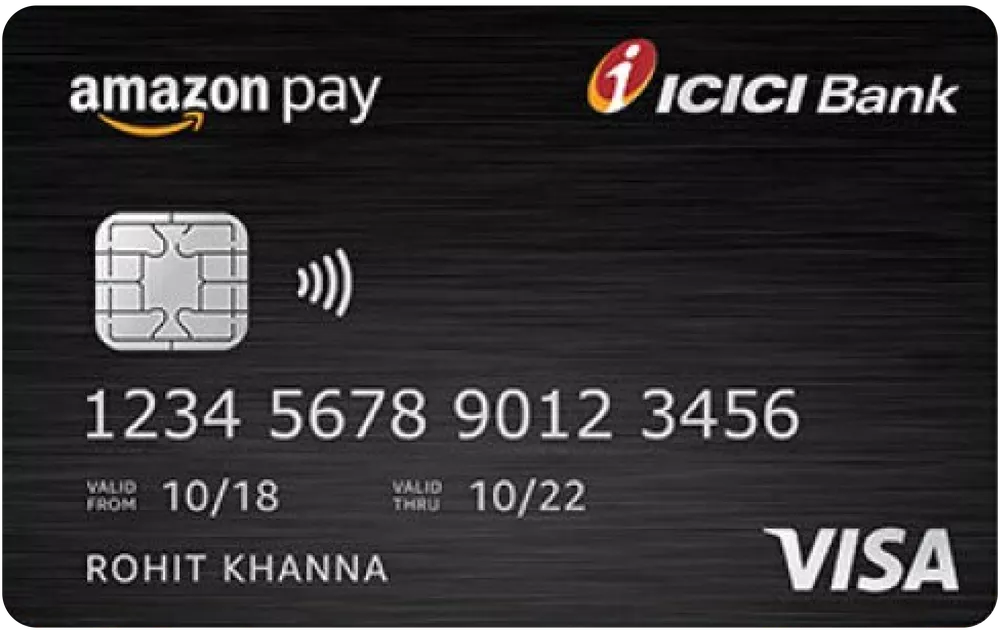

Amazon Pay ICICI Bank Credit Card
Rewards on Amazon Purchases


SimplyCLICK SBI Card
Online shoppers — 10X on Amazon, Cleartrip, Lenskart, BookMyShow


HDFC Millennia Credit Card
online shoppers
Responsible credit card use — the 30-second version
| Habit | Why it matters for CIBIL |
|---|---|
| Pay Total Amount Due before the due date | On-time repayment is the core signal CIBIL highlights |
| Keep utilisation moderate (often cited: under ~30% of limit) | High outstanding vs limit suggests stress |
| Fewer, spaced card applications | Too many enquiries in a short window can pull the score down |
| Keep your oldest card active with a small charge | Longer, clean history helps the profile |
| Check your report yearly for errors | Wrong “overdue” lines are fixable via dispute |
Rewards are optional. A strong score comes from repayment behaviour, not from cashback points.
What CIBIL says actually moves your score
On CIBIL’s own blog, they list four areas lenders care about (wording paraphrased for clarity):
- Paying EMIs and card bills on time
- Mix of credit — secured loans (home, auto) plus unsecured (cards, personal loans) used sensibly
- Not applying for too much credit at once
- Not running cards near their limit every month
They also note that about 79% of loans in their data go to people with scores above 750 — a market-wide stat, not a promise that you will be approved at 751.
RBI’s credit-information FAQs cover your rights to access reports, corrections, and how bureaus should handle data — useful if a closed loan still shows “overdue.”
Rule 1 — Pay on time, and prefer the full bill
On time means before the due date on your statement — not “eventually this quarter.”
Full bill means Total Amount Due (TAD), not Minimum Amount Due (MAD). Paying only the minimum keeps debt alive, triggers high interest, and usually keeps utilisation elevated — all bad for score building.
How to automate it:
- Set auto-debit for full TAD from your salary account.
- Keep a small buffer (e.g. one week’s expenses) so the debit does not bounce.
- If you must pay manually, calendar the due date three days early.
Step-by-step on interest and the minimum trap: How to avoid credit card interest charges in India.
Rule 2 — Watch utilisation (balance vs limit)
Utilisation = outstanding on the card ÷ total credit limit (as a percentage).
Example: ₹30,000 outstanding on a ₹1,00,000 limit → 30% utilisation.
CIBIL’s guidance is to avoid maxing out cards every month. Many planners use under ~30% as a practical ceiling; under ~10% before the statement date is even safer if you are optimising for bureau reporting — exact reporting dates vary by bank.
Tricks that help:
- Request a limit increase only after 6+ months of clean full payments (not during a job change).
- Pay down part of the balance before the statement generates if you had a big purchase month.
- Split spends across two cards instead of pinning one card at 95% utilisation.
Rule 3 — Apply sparingly; keep old accounts open
Each new card application can add a hard enquiry on your bureau file. CIBIL warns against too many applications in a short period.
Better approach:
- Pick one main card for 12 months; prove full payments.
- Add a second card only when you have a clear use case (travel, fuel, UPI rewards).
- Use CardCheck’s Eligibility checker before you apply — fewer wasted enquiries.
Do not close your oldest card just because you got a shiny new one. Closing reduces available limit (utilisation jumps) and can shorten credit history on file. If the old card has an annual fee, ask the bank for downgrade options instead of a hard close when possible.
Rule 4 — Use the card for trackable spends, not survival
Responsible use means planned spends you can clear in cash next month:
- Subscriptions, fuel, groceries, verified online orders
- Not rent you cannot afford, not investing on margin, not repaying another card’s minimum with a second card long term
EMIs: converting a purchase to EMI is fine if the rate is understood and you do not stack fresh revolving balance on top.
Add-on cards: the primary cardholder’s payment record matters; if you are an add-on user, coordinate so the main bill is never late.
Starter cards that reward discipline (not shortcuts)
If you are new to credit, start with one widely used entry card, spend ₹5,000–₹20,000/month you already planned in your budget, and pay 100% each cycle. Compare MITC fees on CardCheck before you apply.
Amazon Pay ICICI Credit Card
Good for: controlled online spends if you already shop on Amazon. Discipline test: pay full TAD — cashback does not fix late payments.
SBI SimplyCLICK Credit Card
Good for: light online + partner spends with a modest fee structure. Watch: reward caps in the MITC; never miss the due date.
HDFC Millennia Credit Card
Good for: salaried users who want cashback on everyday categories. Watch: annual fee waiver thresholds — read the live tariff page, not forum rumours.
No file yet? See credit card with no history or low CIBIL for secured / FD-backed paths.
Monthly score-building routine (15 minutes)
Once a month:
- Open the issuer app — confirm TAD, due date, and no missed debit.
- Note utilisation on each active card.
- Pull or refresh your score via CIBIL’s free score page (see our free CIBIL check guide).
Once a year:
- Download the full credit report and scan for unknown accounts or wrong “DPD” (days past due).
- Raise disputes through the bureau process if something is incorrect — RBI FAQs describe escalation paths.
Chasing a premium card later? Read how to improve CIBIL for premium approvals after you have 6+ months of clean history.
Habits that quietly damage CIBIL
- Paying only minimum due month after month
- Missing due date even once (late fee + bureau reporting risk)
- 90%+ utilisation on every statement cycle
- Five applications in two months because of rejection FOMO
- Settling debt for less than owed without understanding the “settled” remark
- Ignoring co-borrower or guarantor loans on your report
- Letting a card lie inactive until the bank closes it — occasional small use is healthier
Sources
- TransUnion CIBIL — All you need to know about CIBIL score — score range, factors, 79% / 750+ loan stat.
- TransUnion CIBIL — Free CIBIL score — consumer access.
- RBI — Credit information FAQs — rights and bureau conduct.
Please note
Education only. CIBIL scores and approval decisions differ by person and bank. Snapshot 2026-05-19. Use CardCheck’s free Eligibility checker before your next application.
FAQ
- How long does it take to build a strong CIBIL score with a first card?
There is no fixed calendar. CIBIL notes scores reflect history over time. Many users see meaningful movement after 6–12 months of on-time full payments — but your starting point and report mix matter.
- Is 750 a guaranteed approval score?
No. CIBIL mentions 750+ in the context of many loans approved in aggregate data. Banks still check income, existing debt, and internal policies.
- Does checking my own CIBIL score reduce it?
Self checks (consumer viewing your own report/score) are not the same as a lender’s hard enquiry from an application. Use the official free score channel.
- Should I increase my credit limit to improve CIBIL?
A higher limit can lower utilisation % if your spend stays flat — but only ask after stable full payments. A limit hike you use fully does not help.
- Will closing an unused card help my score?
Often no — it can raise utilisation and shorten history. Prefer occasional small use or a fee waiver / downgrade instead of closing your oldest account.
- Where do I see score required for a specific card?
Banks rarely publish cut-offs. See CIBIL score required for each credit card — what banks actually check for realistic bands (illustrative only).
Cards in this comparison (3)
Amazon Pay ICICI Bank Credit Card
Rewards on Amazon Purchases
SimplyCLICK SBI Card
Online shoppers — 10X on Amazon, Cleartrip, Lenskart, BookMyShow
HDFC Millennia Credit Card
online shoppers

Vineet Verma
Lead AnalystLead Financial Researcher & Credit Card Analyst at CardCheck
Vineet specializes in Indian retail banking terms, reward point economics, and MITC verification. Every insight is audited against official bank filings.